

Two years ago, I wrote a post comparing our desire for sex and our desire to spend, “Pleasure is the measure.” TLDR: People think about sex as desire, but sex therapists want us to about sex as pleasure. This post is about food and spending.
The funny thing about consumption is we do so much of it but get so little out of it.
The first bite tastes best
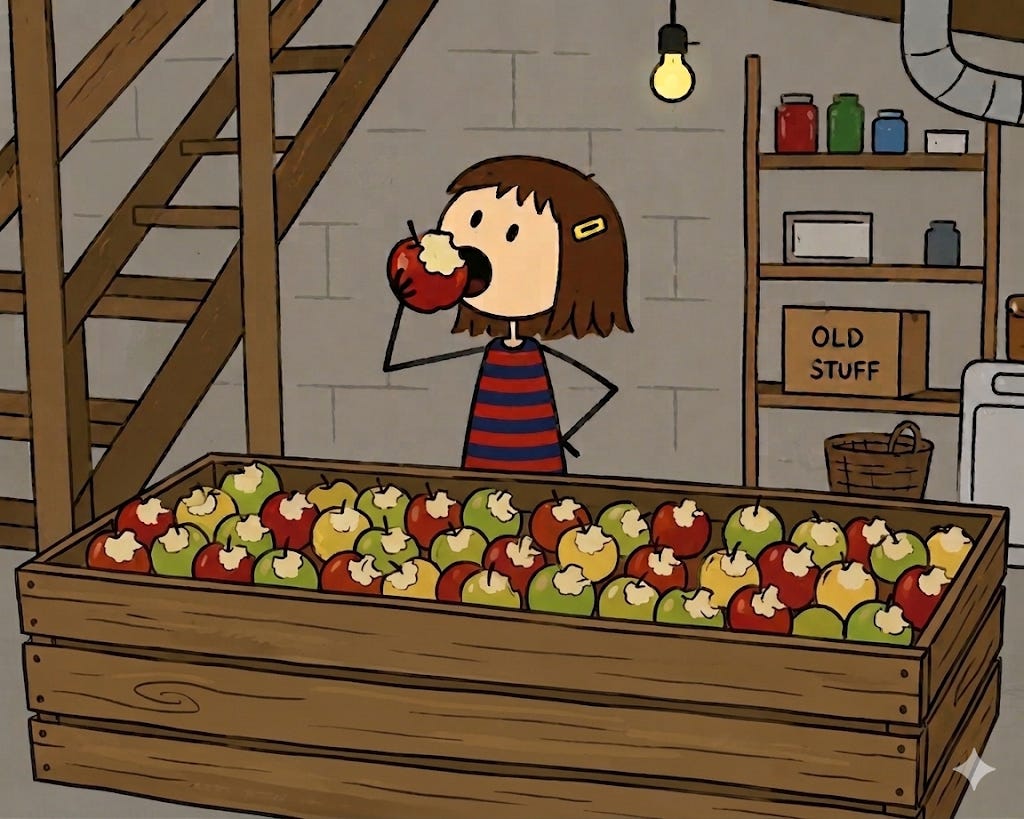
In Beverly Cleary’s children’s book Beezus and Ramona, Beezus finds her younger four-year-old sister Ramona Quimby groaning from a stomach ache. Turns out, Ramona found a bushel of apples in the basement and greedily took a single bite out of every one. Beezus is angry at Ramona for wasting the entire batch, but Ramona explains she did it because “the first bite tastes best.”
Of course, to Ramona’s disappointment, the first bite of every apple didn’t taste as good as the bite of the first apple.
Tempted by Turkish Delights
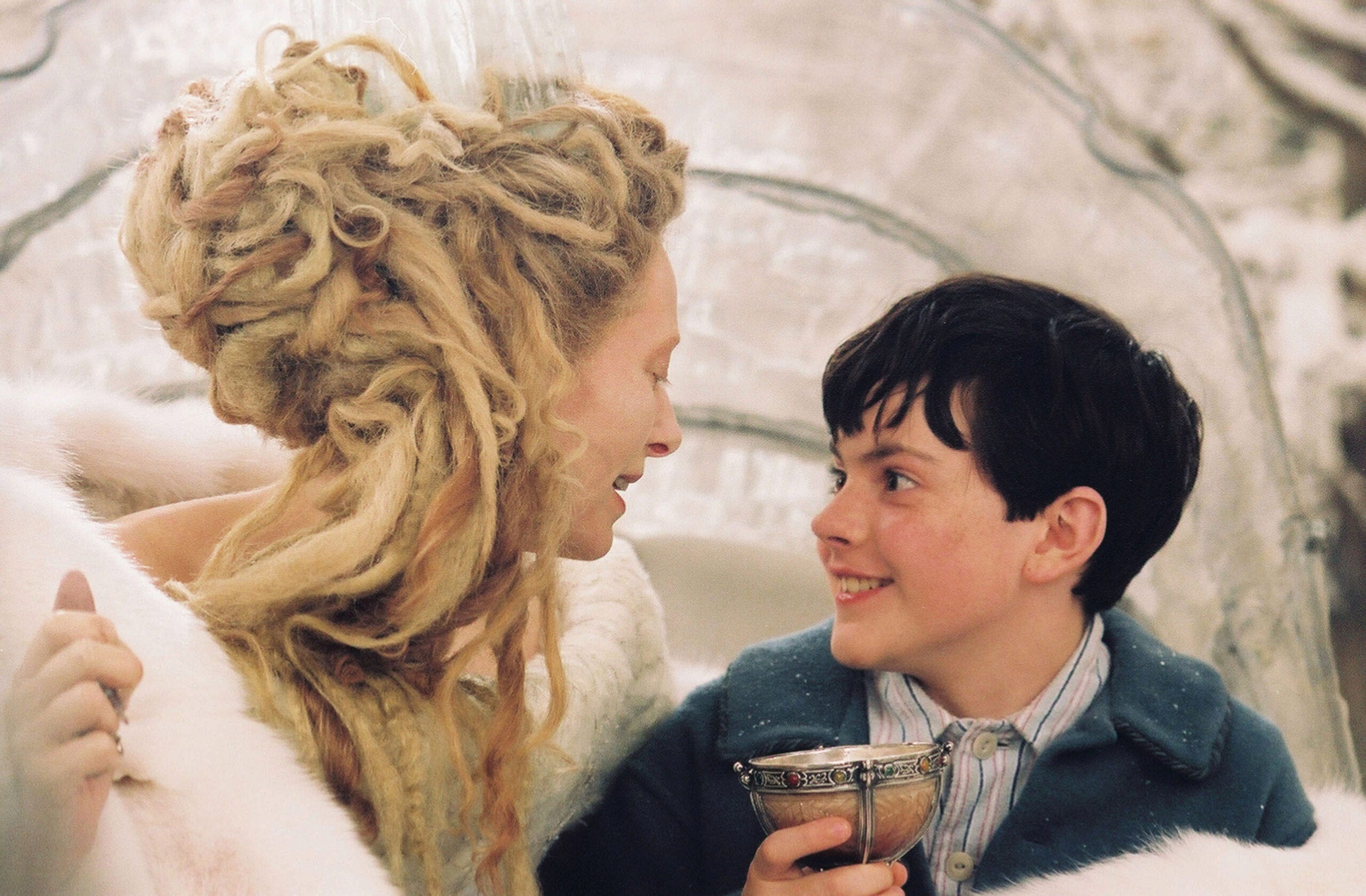
In CS Lewis’s The Lion, the Witch and the Wardrobe, the evil White Witch uses seduces young Edmund to betray his siblings with magically addictive Turkish Delights. Lewis uses the treat to represent sin, temptation, and the degradation of pleasure:
‘‘It is dull, Son of Adam, to drink without eating,’’ said the Queen presently. ‘‘What would you like best to eat?’’
“Turkish Delight, please, your Majesty,” said Edmund.
The Queen let another drop fall from her bottle on to the snow, and instantly there appeared a round box, tied with green silk ribbon, which, when opened, turned out to contain several pounds of the best Turkish Delight. Each piece was sweet and light to the very centre and Edmund had never tasted anything more delicious. He was quite warm now, and very comfortable.
While he was eating the Queen kept asking him questions. At first Edmund tried to remember that it is rude to speak with one’s mouth full, but soon he forgot about this and thought only of trying to shovel down as much Turkish Delight as he could, and the more he ate the more he wanted to eat, and he never asked himself why the Queen should be so inquisitive.
…
At last the Turkish Delight was all finished and Edmund was looking very hard at the empty box and wishing that she would ask him whether he would like some more. Probably the Queen knew quite well what he was thinking; for she knew, though Edmund did not, that this was enchanted Turkish Delight and hat anyone who had once tasted it would want more and more of it, and would even, if they were allowed, go on eating it till they killed themselves. But she did not offer him any more. Instead, she said to him,
“Son of Adam, I should so much like to see your brother and your two sisters. Will you bring them to me?”
Edmund’s fall lay in his inability to know when he had enough.
The joy runs out
To maximize pleasure, you need to put guardrails around it.
Jan Chozen Bays is a physician and ordained Zen teacher in Oregon who teaches people mindful eating. She gives people squares of chocolate and asks them to actually pay attention to their enjoyment. Most people say that, after about the third square, the joy in eating chocolate runs out; it doesn’t taste as good. In their regular life, many people deal with this by eating more squares of chocolate, unmindfully chasing that initial rush of pleasure they got from that first bite. Dr. Bays says, “That doesn’t work because your sensors in your nose and mouth get fatigued. You have to give them time to come back.” If you wanted to eat for pleasure, you would have to wait for your sensors to reset. When you do this, you tend to eat less and enjoy it more.1
Good, bad, and consequences
I had a former FF1 student who was a dietician. She would tell her clients:
“With food, there is no good or bad, only consequences.”
She realized the same applies in personal finance: there is no good or bad spending, just consequences. Setting aside prudence for a second, when we’re thoughtless unconscious about eating thing, or buying things, or having experiences, we lose its initial pleasure.2 The hedonic treadmill. Every person who makes more money now than in their 20s always marvels how happy they were with so little and now things that used to be special have become routine. For many, even travel has become somewhat banal, just another place we haven’t seen but feel like we should3. And yet we continue to chase it.
He who binds to himself a joy
Does the winged life destroy
He who kisses the joy as it flies
Lives in eternity's sunrise
— William Blake
When we, like Ramona, take a bite out of everything we lose the joy of novelty and make it trite. Ever been to a resort and seen the bored, listless look on rich people’s faces? So much money and so little enjoyment. Like eating too many squares of chocolate, they can’t get satisfied.
The secret to pleasure may be limiting it.4 As behavioral scientist Daniel Pink explains it, frequency kills enjoyment, scarcity restores it. Strangely, a little bit of a treat goes a longer way than a lot of a treat.
Less is more… pleasure
You don’t have to eliminate pleasure, you have to protect it, treasure it. The secret is savoring. We lose something precious when we treat life like a bottomless box of Turkish Delights.
If we choose to become more intentional and more grateful for food, we would eat less of it. And enjoy it more.
If we choose to become more intentional and more grateful for money, we would spend less of it. And enjoy it more.
Ultimately, it isn’t how much you spend, but how much pleasure you got out of it.
Student: Who is rich?
Teacher: One who rejoices in their portion.
— Pirkei Avot (Ethics of the Fathers 4:1)
Next FF cohort
My current FF1 cohort is wrapping up and if people were interested, I’d offer another cohort if there was interest. And for those of you have taken FF1 and want to dive into investing and earning more income, FF2 starts this summer too.
This is an addict’s response.
Partially because class identity and status competition.
The problem with “treat culture”
The French in me approaches this and adds another dimension: it's not just about frequency, it's about quality and the cultivation of taste. Connoisseurship as a form of pleasure protection. The same logic applies to money: you spend less, but on things chosen with real discernment. The pleasure lives in the selection, not just the acquisition. Like spending money on a gift for example.
What a great post. I love the Narnia excerpt, who else was deeply disappointed the first time they had Turkish delight?